
• Testing Lab
  • Training

Ecodesign Requirements for Electronic Displays

Commission Regulation (EU) 2019/2021 establishes the ecodesign of electronic displays placed on the European Union market, including televisions, monitors and digital signage displays. Adopted under the Ecodesign Directive 2009/125/EC, its principal requirements have applied since March 1, 2021. The Regulation was subsequently amended by Regulation (EU) 2021/341.

Which Electronic Displays Are Covered?

Regulation (EU) 2019/2021 generally applies to electronic displays, including televisions, monitors and digital signage displays. However, exclusions and partial exemptions apply depending on the display’s size, function and intended application.

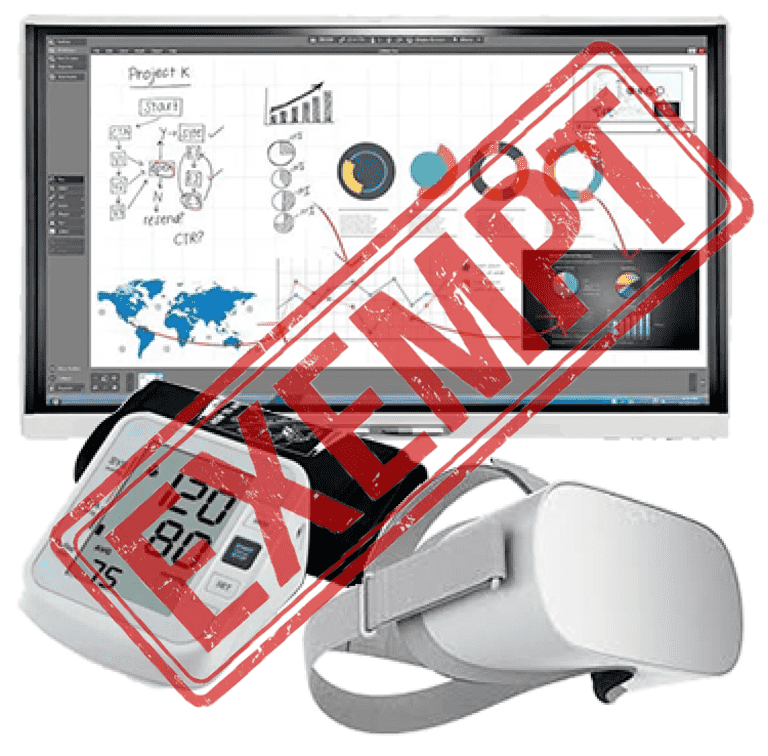
Products outside the full scope include certain small displays, projectors, all-in-one videoconferencing systems, medical displays and virtual-reality headsets. Some specialized displays—including certain professional, security, broadcast and interactive displays—may remain subject to only particular requirements.

Manufacturers should therefore assess the precise definitions and exclusions in Article 1 and Annex III before concluding that a display is exempt.

Energy Efficiency - Ecodesign Requirements for Servers
Ecodesign of Electronic Displays
Ecodesign excluded Displays

However, as electronic displays have become more popular and better integrated into existing products, it no longer makes sense to treat every display as though it were a television. Indeed, regulation 2019/2021 describes the environmental regulation of displays using a definition that includes TVs. Electronic displays are governed according to application, screen area, and luminance/power consumption.

Some displays are exempt from 2019/2021 – for example:

  • interactive whiteboards,
  • virtual reality headsets, and
  • displays integrated into security or medical devices.

Five Material-Efficiency Requirements for Electronic Displays

1. Design for dismantling, recycling and recovery

Joining, fastening and sealing techniques must not prevent the removal of components identified for treatment under the WEEE Directive. Manufacturers, importers and authorised representatives must also provide relevant dismantling information, including the sequence of dismantling operations and the tools or technologies required to access specified components.

2. Marking of plastic components

Joining, fastening and sealing techniques must not prevent the removal of components identified for treatment under the WEEE Directive. Manufacturers, importers and authorised representatives must also provide relevant dismantling information, including the sequence of dismantling operations and the tools or technologies required to access specified components.

3. Cadmium marking

Where the concentration of cadmium in a homogeneous material of the screen panel exceeds 0.01% by weight, the electronic display must bear the prescribed “Cadmium inside” logo. An additional logo must be placed internally in a position visible after removal of the external back cover. Displays that do not exceed the applicable concentration must use the prescribed “Cadmium free” logo.

4. Halogenated flame retardants

Halogenated flame retardants are not permitted in the enclosure and stand of electronic displays under Regulation (EU) 2019/2021. This product-specific ecodesign restriction should be assessed separately from substance restrictions imposed under RoHS, REACH and the POPs Regulation.

5. Design for repair and reuse

Manufacturers, importers and authorised representatives must make specified spare parts available for prescribed periods. Depending on the part, availability must extend to professional repairers or both professional repairers and end users. The Regulation also establishes requirements concerning access to repair information, spare-part delivery times, replaceability using commonly available tools, and access to necessary software or firmware.

Energy-Efficiency and Power-Consumption Requirements

In-scope electronic displays must meet requirements relating to:

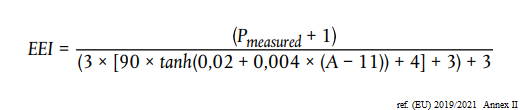
  • The Energy Efficiency Index in on mode;
  • Maximum power demand in off mode, standby mode and networked standby;
  • Automatic standby functionality;
  • Forced menus and preset picture settings;
  • Peak white luminance ratios; and
  • Measurement and calculation methods used to demonstrate compliance.

Ecodesign Considerations for Electronic Displays

With this in mind, ecodesign of electronic displays that does fall under regulation 2019/2021 must follow prescribed specifications. Producers must be mindful of things like device efficiency, the power demanded while the device operates in different modes, and the technical information packaged with the product. A display’s design will also contribute directly to how recyclable it will be once it cycles out of the market, according to the WEEE Directive.

Some key ecodesign parameters to consider include:

  • How the display functionality and brightness can affect the Energy Efficiency Index (EEI), and what allowances are given
  • The correct way to indicate the presence and composition of plastic parts
  • The correct way to indicate the presence of cadmium and other hazardous substances
  • How an electronic display should be designed for repair and reuse
  • EEI limits for on/off and standby modes

Labels for Displays are Governed Separately

Ecodesign and energy labelling are related but separate obligations. Regulation (EU) 2019/2021 establishes ecodesign requirements, while Delegated Regulation (EU) 2019/2013 establishes energy-labelling and product-information requirements for electronic displays.

Depending on their role, suppliers and dealers may be required to:

  • Display the EU energy label using the A-to-G scale;
  • Provide a product information sheet;
  • Register the product model in EPREL;
  • Include the energy-efficiency class in visual advertisements; and
  • Display the applicable energy-efficiency range in technical promotional material.

A final note for producers: the labels that will go on your displays need just as much attention as the displays themselves. Electronic displays are subject to separate guidelines for their packaging and advertisements, and their use falls under regulation 2019/2013 for this purpose.

For example, these Energy Efficiency Class labels are placed on visual advertisements and technical promotional material. This is only one example of information that must be provided to retailers and consumers.

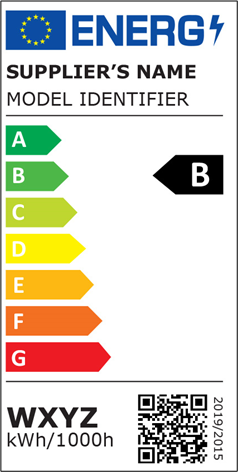
Energy Efficiency Class labels arrows
energy label performance

Different markets can have different product environmental label requirements across similar products. The scope and presentation of any product information are subject to the standards defined in 2019/2013. This regulation covers not only your labels and instruction manuals but also product advertisements and technical promotions.

Many electronics sold in the global marketplace, including electronic displays, must bear standardized labels like this one that give information about the product’s environmental impact. This can include the device’s efficiency rating and net power consumed. Be sure to save time and stress: keep this in mind when planning your marketing cycles!

Labels for Displays are Governed Separately

Before placing an in-scope electronic display on the EU market, the manufacturer must perform the applicable conformity assessment and compile supporting technical documentation. The documentation should identify the product model, applicable requirements, calculation and test methods, measured performance, material-efficiency information and any exclusions or allowances relied upon.

Applicable ecodesign requirements also form part of the product’s EU conformity and CE-marking obligations.

Enviropass can help determine the applicable requirements, review test and technical documentation, identify documentation gaps, and support the preparation of an ecodesign compliance file.

Ecodesign of Electronic Displays FAQ

Which electronic displays are covered by Regulation (EU) 2019/2021?

Regulation (EU) 2019/2021 generally applies to electronic displays placed on the EU market, including televisions, computer monitors and digital signage displays. Whether a particular product is covered depends on its screen area, functions, intended application and whether it meets one of the exclusions or partial exemptions defined by the Regulation.

Regulation (EU) 2019/2021. Screen area is calculated by multiplying the maximum viewable image width by its maximum viewable height along the surface of the panel.

However, other requirements, such as RoHS, REACH, WEEE or product-specific ecodesign rules, may still apply to the product containing the display.

Medical displays, as defined by Regulation (EU) 2019/2021, are excluded from its scope. Projectors, virtual-reality headsets and all-in-one videoconferencing systems are also excluded.

Security displays, professional displays, broadcast displays, digital interactive whiteboards, digital photo frames and digital signage displays are not necessarily completely exempt. They are excluded from certain energy-efficiency and functional requirements but may remain subject to other provisions, particularly material-efficiency, repairability and information requirements.

Status displays and control panels also benefit from partial exemptions. Manufacturers should confirm that their product meets the applicable regulatory definition rather than relying only on its commercial name.

Ecodesign and energy labelling are related but separate obligations.

Regulation (EU) 2019/2021 establishes minimum requirements concerning energy efficiency, power consumption, standby functions, material efficiency, repairability, spare parts and product information.

Delegated Regulation (EU) 2019/2013 establishes energy-labelling requirements, including the A-to-G energy-efficiency scale, the product information sheet, EPREL registration and information that must appear in advertisements and technical promotional material.

A product may therefore be subject to both regulations.

Electronic displays covered by Delegated Regulation (EU) 2019/2013 must generally be registered in the European Product Registry for Energy Labelling—EPREL—before they are placed on the EU market. Suppliers must enter the required product-model information, upload the applicable technical documentation and product information sheet, and generate the required energy label.

Certain specialized or excluded displays may not be subject to these registration and labelling requirements. The scope of Regulation (EU) 2019/2013 should therefore be assessed separately from the ecodesign regulation.

For at least seven years after the last unit of a model is placed on the market, manufacturers, importers or authorised representatives must make specified parts available to professional repairers. These include:

  • Internal power supplies;
  • Connectors for external equipment;
  • Capacitors above 400 microfarads;
  • Batteries and accumulators;
  • DVD or Blu-ray modules, when applicable; and
  • Hard-drive or solid-state-drive modules, when applicable.

External power supplies and remote controls must be available to both professional repairers and end users for the same minimum period.

The parts must be replaceable using commonly available tools and without permanently damaging the appliance. During the required availability period, spare parts must generally be delivered within 15 working days after an order is received.

Specified spare parts must remain available for at least seven years after the last unit of the model is placed on the market.

Access to prescribed repair and maintenance information must be provided to qualifying professional repairers beginning no later than two years after the first unit of the model is placed on the market and continuing through the applicable spare-parts availability period.

The latest available firmware version must remain available for at least eight years after the last unit of the model is placed on the market. The latest available firmware security update must also remain available for at least eight years.

End-of-life dismantling information must remain available for at least 15 years after the last unit of the product model is placed on the market.

Regulation (EU) 2019/2021 prohibits the use of halogenated flame retardants in the enclosure and stand of electronic displays. This is not necessarily a prohibition covering every material or component within the complete display.

The requirement should be assessed separately from substance restrictions under RoHS, REACH and the EU POPs Regulation. Plastic components containing permitted flame retardants may also be subject to specific material-marking requirements.

An electronic display must bear the prescribed “Cadmium inside” logo when the concentration of cadmium in a homogeneous material of its screen panel exceeds 0.01% by weight. The logo must be visible, durable, legible and indelible. An additional logo must be firmly attached internally to the display panel or moulded in a location visible after the external back cover is removed.

Where cadmium does not exceed 0.01% by weight in any homogeneous material of the display, the prescribed “Cadmium free” logo must be used.

These marking requirements are connected with—but separate from—the cadmium restrictions and exemptions established under the RoHS Directive.

Yes. For an electronic display within the scope of Regulation (EU) 2019/2021, the applicable ecodesign requirements form part of the product’s EU conformity and CE-marking obligations.

The manufacturer must perform the applicable conformity assessment, compile technical documentation, issue an EU Declaration of Conformity and affix the CE marking before placing the product on the EU market. The technical file should document the product’s scope determination, test results, energy calculations, material-efficiency requirements and any exemptions or allowances used.

Energy labelling and EPREL registration are additional obligations and should not be confused with the CE marking itself.

Do you still need more information about ecodesign requirements for electronic displays? Contact Enviropass and speak with one of our experts.