Regulations of Nanotechnologies
Nanomaterials enable exciting new technologies. Is it also problematic? What are the regulations of nanotechnologies?
Nanotechnologies are...
Hazards and Risks - Nanotechnologies in Medicine
Nanotechnology leads the way to an innovative medicine called nanomedicine. Nanotechnology in medicine enables medical treatments using, for example, nanoelectronic biosensors. Biological devices were inconceivable only a few decades ago.
However, the various benefits of nanotechnology in medical treatments do not come without risks and dangers. Indeed, these medical applications can bring ecological and moral concerns. This relatively new science has not had the necessary time yet to be sufficiently researched and understood of all its consequences. Questions such as:
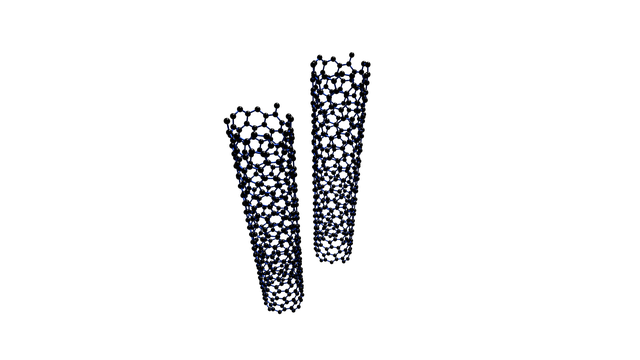
Notably, one harmful consequence to this technology is already occurring with carbon nanotubes applications. Indeed, carbon nanotubes are increasingly present in device modeling, automotive parts, and energy storage. Despite astonishing benefits, researchers have discovered that carbon nanotubes resemble asbestos fibers. As a result, they can cause various lung diseases and cancers found in animal testing.
Ref. Assessment of the Carcinogenicity of Carbon Nanotubes in the Respiratory System. Marcella Barbarino1,2,* and Antonio Giordano1,2. Daniel L. Pouliquen, Academic Editor, and Joanna Kopecka, Academic Editor. Cancers (Basel). 2021 Mar; 13(6): 1318. Published online 2021 Mar 15. DOI: 10.3390/cancers13061318
Nanotechnologies Engineering and Regulations
In the presence of potential risks, various jurisdictions are publishing regulations to minimize the damages nanotechnologies could cause to our health and the environment. Presently, worldwide organizations are also in the process of creating specific standards on nanomaterials.
Nevertheless, many consider that nanomaterials fall under the same conditions as chemicals and mixtures.
Nanomaterial Regulations in the European Union
The EU is the leader worldwide in regulating these nanoforms. Currently, they have the most specific regulations.
Nanomaterials under EU REACH and CLP Regulations
Nanomaterials in Biocidal Products and BPR
Some nanomaterials serve as biocides. Accordingly, the EU Biocidal Products Regulation (BPR) targets nanotechnologies with monitoring and reporting requirements under certain conditions.
Some of the Important EU Nanotechnologies Requirements
Below, you can find examples of articles applicable to nanomaterials:
| Regulation | Reference | Description |
| BPR Regulation | 528/2012 | - Article 3(z) – definition of nanomaterial
- Article 19 – Conditions for granting an authorization
- Article 58 – Placing on the market of treated articles, with the name of all nanomaterials contained in the biocidal products, followed by the word ‘nano’ in brackets.
- Article 69 – Classification, packaging, and labeling of biocidal products, with the nanomaterials contained in the product, if any, and any specific related risks, and, following each reference to nanomaterials, the word ‘nano’ in brackets.
|
| CLP Regulation | 1272/2008 | - Annex I – Classification and labeling requirements for hazardous substances and mixtures
- Annex II – Special rules for labeling and packaging of certain substances and mixtures
- Annex V – Hazard pictograms
- Annex VI – Harmonized classification and labeling for certain hazardous substances
- Annex VIII – Harmonized information relating to emergency health response and preventative measures
|
| REACH | Regulation No 1907/2006 | - Annex I – General provisions for assessing substances and preparing chemical safety reports
- Annexes III and VII to XI – Criteria and standard information requestions for substances placed on the EU Market, in quantities of 1 tonne or more per year
- Annex VI and article 10 – Information requirements to be submitted for general registration purposes
- Annex XII – General provisions for downstream users to assess substances and prepare chemical safety reports
|
Regulations of Nanotehncologies in the United States
Regulations of Nanotehncologies in Canada
Regulations of Nanotehncologies in China
International Standards for Nanotechnologies
Benefits of Nanostructures
Despite hazards, these nanomaterials create opportunities to assist in various domains. Healthcare issues often themselves microscopic require microscopic solutions. Thus the need for nanotechnology.
Currently Implemented Nanotechnologies in our Everyday Lives
Undoubtedly, nanomaterials and nanotechnologies are already everywhere. Here is a list of a few sectors where nanotechnology is already present:
Undoubtedly, nanomaterials and nanotechnologies are already everywhere. Here is a list of a few sectors where nanotechnology is already present:
| Example |
Description |
| OLED (Organic Light-emitting diode) Screens |
Made of “thin flexible sheets of an organic electroluminescent material” (Oxford Languages). |
| Water repellent clothing |
Silica nanoparticles are weaved into the apparel’s fabric or sprayed onto it. |
| Stronger adhesives |
Unlike conventional glues, nano adhesive can be more adhesive when the temperature increases. |
| Flame retardants on furniture |
A carbon nanofiber coating reduces the furniture’s flammability. |
Potential of Nanotechnologies
Despite all the readily available nanotechnology present today, the most exciting part is what is to come.
Improvements in Electronics
Nanoelectronics is a growing specialization of electronic engineering. Undoubtedly, nanoelectronics holds immense potential for future developments. Thus, longer-lasting, higher quality, lighter electronic components with nanomaterials are currently progressing. For instance, nanoelectronics can be:
- Nanobatteries can be significantly smaller and lighter than regular ones. Nanobatteries can also have a much longer life.
- Circuit boards with nanolayers of conductive materials.
- Nanodisplays with carbon nanotubes.
- Nanoscale integrated circuits chips with self-aligning nanostructures.
Medical Nano-Applications
Finally, advanced research is also being done, especially in the medical domain, to implement this science to better heal patients in a personalized and efficient way. We can expect to see improved drug delivery methods that target specific sick cells without the negative side effect of attacking healthy cells. Treatments for chronic diseases like heart disease and diabetes can become more refined. Cancer treatments can also improve.
In conclusion, regulations like REACH, TSCA, or BPR already apply to traditional substances and nanomaterials. Nevertheless, specific legislations will likely increasingly control nanotechnology risks.