
Sustainable cosmetics is becoming an important challenge in the industry, from microplastics in formulas to restricted substances in packaging. Cosmetic brands must understand how their products may affect both consumers and the environment.
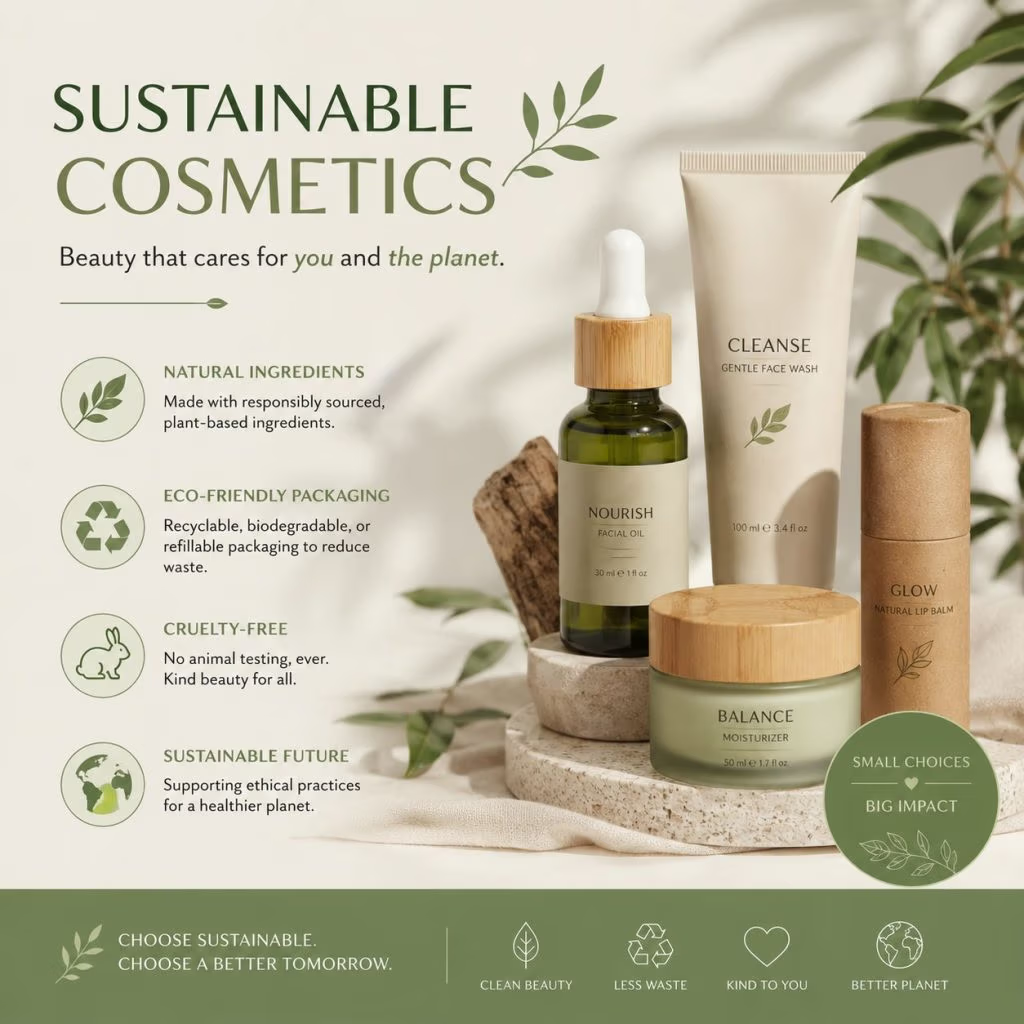
Cosmetic products can affect the environment throughout their life cycle. Ingredients may be rinsed down the drain, packaging may enter recycling or waste streams, and chemical substances may persist in the environment.
For example, microplastics in cosmetics are especially important because many personal care products are used with water and washed away after use. Rinse-off products such as facial scrubs, cleansers, toothpaste, shower gels, and exfoliating products may release particles directly into wastewater systems.
Microplastics are plastic particles generally smaller than 5 mm. When intentionally added to cosmetic products, they may serve functions such as exfoliation, cleansing, texture, glitter, film formation, or fragrance encapsulation. Once released, they may persist in aquatic and terrestrial environments and raise concerns for wildlife, ecosystems, and long-term pollution.
Because of these concerns, several jurisdictions have introduced rules restricting microbeads or intentionally added microplastics in cosmetics and personal care products. In the United States, the Microbead-Free Waters Act prohibits the manufacturing, packaging, and distribution of rinse-off cosmetics containing plastic microbeads. The FDA explains that the law was passed because microbeads may not be filtered out by wastewater treatment systems and can enter lakes and oceans, where wildlife may mistake them for food.
Canada also regulates plastic microbeads in toiletries. Under the Microbeads in Toiletries Regulations, toiletries used to exfoliate or cleanse cannot contain plastic microbeads. This prohibition applies to the manufacture, import, and sale of these products, including certain non-prescription drugs and natural health products.
In the European Union, the EU REACH restriction on intentionally added microplastics is broader than traditional microbead bans. Regulation (EU) 2023/2055 restricts synthetic polymer microparticles intentionally added to mixtures. It also includes phased transition periods for different product categories.
For cosmetics, the EU transition timeline varies by product type. Rinse-off cosmetic products, leave-on products, fragrance encapsulation, and lip, nail, and makeup products may follow different transition periods. These timelines depend on the product category and any applicable exceptions.
Environmental cosmetic compliance can be challenging because requirements vary by jurisdiction and product type. An exfoliating cleanser, a makeup product, a fragranced lotion, and a toothpaste may all face different rules.
Documentation is another challenge. Cosmetic brands often rely on raw material suppliers, packaging suppliers, contract manufacturers, and testing laboratories. Incomplete or outdated supplier data can make it difficult to confirm restricted substances or environmentally regulated materials.
This is why environmental compliance should be considered early in product development, not only at the launch stage. Reformulating a product or redesigning packaging after production can be costly and time-consuming.
Before placing a cosmetic product on the market, companies should review both the formulation and the packaging. Important checks may include:
Assess plastic, glass, metal, paper, coatings, inks, adhesives, labels, pumps, caps, and decorative finishes for restricted substances and environmental obligations.
Enviropass supports companies in managing complex product compliance requirements through documentation review, testing support, and regulatory assessment. For cosmetic brands, this support can be valuable when:
By working with a compliance partner, cosmetic brands can better understand regulatory risks and prepare stronger technical files for customers, retailers, and regulatory authorities.
Environmental compliance applies not only to ingredients, but also to packaging. Packaging components such as bottles, jars, tubes, labels, and inks may need to be assessed for plastic resin reporting obligations. Common resin types in cosmetic packaging may include PET, HDPE, LDPE, PP, PS, PVC, fossil-based resins, bio-based resins, and recycled resins. Under Canada’s Federal Plastics Registry, certain organizations may need to report the identity, source, quantity, and calculation method for applicable plastic resins.
Depending on the market, cosmetic packaging may need to be reviewed for:
Area | Why It Matters |
|---|---|
Restricted substances | Packaging may contain substances regulated under chemical control rules, such as heavy metals, phthalates, PFAS, bisphenols, or other restricted chemicals. |
Recyclability | Some markets and retailers expect packaging to meet recyclability or sustainability criteria. |
Extended producer responsibility | Brands may need to meet packaging reporting, registration, labeling, or fee obligations. |
Claims and green marketing | Environmental claims such as recyclable, biodegradable, plastic-free, or eco-friendly should be accurate and supported. |
Microplastics in cosmetics are a clear example of this shift. Certain plastic particles can persist in the environment and enter aquatic ecosystems. Therefore, many jurisdictions have introduced restrictions on microbeads or intentionally added microplastics.
For cosmetic brands, a strong compliance strategy should review both the product formula and the packaging. By addressing environmental requirements early, companies can reduce regulatory risks, support retailers, and bring more cosmetic products to market.
Environmental compliance helps cosmetic brands manage risks related to ingredients, packaging, waste, recyclability, and environmental claims. Cosmetic products may affect the environment through rinse-off ingredients, persistent particles, packaging waste, or restricted substances.
Microbeads are a specific type of small plastic particle often used for exfoliating or cleansing. Microplastics are a broader term that can include many types of small plastic particles or synthetic polymer microparticles used for different functions.
Microplastics are small plastic particles that may be added to cosmetics for functions such as exfoliation, cleansing, texture, glitter, film formation, or fragrance encapsulation. They can raise environmental concerns because they may persist in water, soil, and ecosystems.
Useful documents may include product formulas, ingredient specifications, safety data sheets, certificates of analysis, supplier declarations, packaging specifications, test reports, and evidence supporting environmental claims such as recyclable, biodegradable, plastic-free, or microplastic-free.
Yes. A product may meet consumer safety and labeling requirements but still raise environmental concerns. For example, the formula may contain restricted microplastics, or the packaging may include regulated substances or materials that do not meet recyclability expectations.
Contact Enviropass today to support your product assessment, documentation review, and environmental compliance towards sustainable cosmetics. Our team can help you understand your regulatory obligations and bring more compliant products to market.
Bloc de texte accentué