
Hexavalent chromium testing in metals is essential for identifying Cr(VI) in coatings, passivated surfaces, plated parts, and other treated metal components. Using UV-Vis spectrophotometry following IEC 62321 provides a recognized method to evaluate Cr(VI) presence and support reliable product compliance decisions. This testing is especially important for RoHS, REACH, and broader North American regulatory obligations, including customer requirements, occupational safety, and environmental risk management.
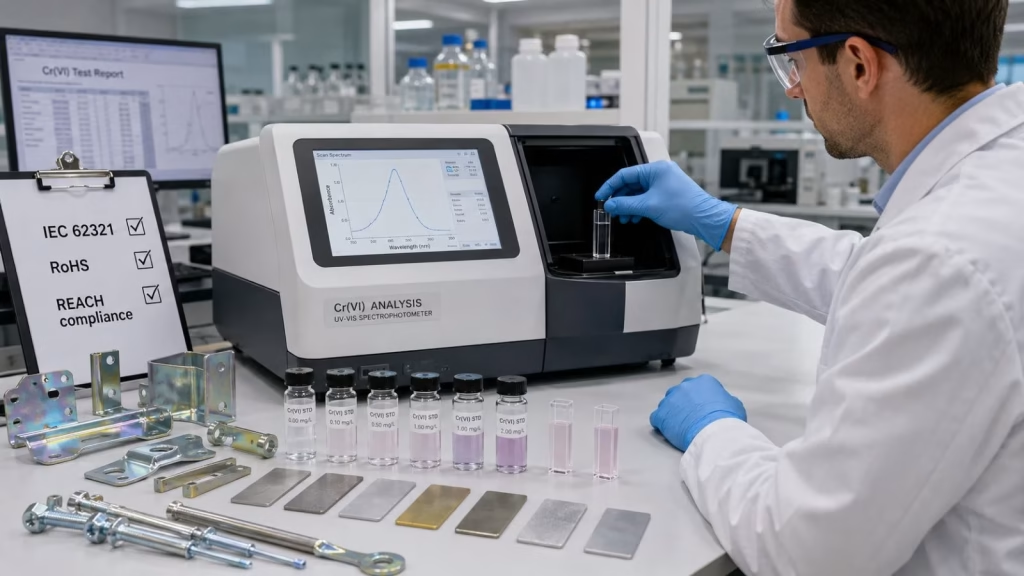
Under RoHS worldwide, hexavalent chromium is one of the restricted substances for Electrical and Electronic Equipment (EEE), and the relevant maximum concentration is 0.1% by weight in homogeneous materials. The European Commission’s RoHS page identifies hexavalent chromium among the ten restricted substances, and the RoHS FAQ repeats that the maximum concentration for hexavalent chromium is 0.1% by weight in all homogeneous materials in EEE.
The RoHS FAQ also gives the critical compliance nuance for coated metals: simple, reliable, and very sensitive analysis of Cr(VI) in passivation coatings is available in µg/cm², whereas analysis as % by weight is difficult and requires knowledge of the coating’s thickness and density. The same document states that intentionally hexavalent passivation coatings are commonly around 10% of the coating, whereas trivalent coatings are intended to have Cr(VI) at <0.1%, although exceptions and borderline cases occur. That is why IEC 62321-7-1 is the accepted operational method for coated metals even though the legal limit is expressed in % by weight.
EU REACH and RoHS are explicitly described by the European Commission as complementary. RoHS is sector-specific to EEE and applies concentration limits to finished products, while REACH is horizontal and covers substances, mixtures, and articles more broadly. The Commission’s “common understanding” document states that the two regimes should apply without prejudice to each other, but avoid unnecessary double regulation where one instrument already adequately controls the risk.
For Cr(VI), REACH does not impose a single universal “finished metal article” Cr(VI) threshold equivalent to RoHS’s homogeneous-material 0.1%. Instead, two patterns dominate. The first is authorisation: ECHA’s authorisation list includes important chromium(VI) substances such as chromium trioxide and acids generated from chromium trioxide and their oligomers, among other hexavalent chromium substances. The second is sector-specific restriction, such as 3 mg/kg for chromium VI in leather articles in contact with skin and 2 mg/kg for soluble chromium VI in cement and cement-containing mixtures.
Hexavalent chromium testing should not be positioned only as a European RoHS or REACH issue. For North American products and operations, Cr(VI) can also trigger consumer-warning, workplace-safety, air-emission, hazardous-waste, and chemical-management obligations. These rules do not all use the same measurement basis: IEC 62321-7-1 supports finished-part evaluation of corrosion-protected metal coatings, while workplace, emissions, and waste rules may require air monitoring, stack testing, waste characterization, or process-control data.
In the United States, one of the most important market-facing regulations is California Proposition 65. Chromium hexavalent compounds are listed for cancer and reproductive toxicity, with an inhalation No Significant Risk Level of 0.001 µg/day and an oral reproductive Maximum Allowable Dose Level of 8.2 µg/day. For plated or passivated metal parts sold in California, Cr(VI) testing can help determine whether further exposure assessment or warning evaluation is needed; however, Proposition 65 is exposure-based, not simply a concentration-limit regulation.
For children’s products and toys in the United States, the CPSC makes ASTM F963 mandatory for children’s toys through 16 CFR part 1250. ASTM F963 includes heavy-element requirements for paints, similar surface coatings, and toy substrate materials; CPSC guidance notes that chromium is among the heavy metals with individual solubility limits. This is not the same as RoHS Cr(VI) testing, but it can be relevant when chromated or plated metal components are accessible in toys or child-use products.
Cr(VI) is also heavily regulated from an occupational exposure perspective. OSHA identifies specific Cr(VI) standards for general industry, maritime, and construction, including 29 CFR 1910.1026, 1915.1026, and 1926.1126. NIOSH’s Pocket Guide lists chromic acid and chromates as potential occupational carcinogens and gives an OSHA PEL of 0.005 mg/m³ and a NIOSH REL of 0.0002 mg/m³. This is especially important for chromating, passivation, electroplating, welding, grinding, sanding, or reworking stainless steel or treated metal surfaces.
U.S. environmental regulations can also apply to operations that create or use Cr(VI). Under EPA’s National Emission Standards for Hazardous Air Pollutants, 40 CFR Part 63 Subpart N applies to chromium electroplating and chromium anodizing tanks at facilities performing hard chromium electroplating, decorative chromium electroplating, or chromium anodizing. The rule sets total chromium emission limits and includes specific requirements for hard chromium, decorative chromium, and chromium anodizing operations.
Cr(VI)-related wastes may also require RCRA hazardous-waste evaluation. Under 40 CFR 261.24, a waste exhibits the toxicity characteristic when the TCLP extract contains contaminants at or above listed regulatory levels; chromium is listed as hazardous waste number D007 with a regulatory level of 5.0 mg/L. This is a total chromium waste-characterization requirement, not a Cr(VI)-specific finished-product test, but it matters for plating sludge, spent solutions, contaminated abrasives, filters, laboratory residues, and other chromium-bearing wastes.
In Canada, there is no broad federal RoHS-equivalent regulation that sets a universal Cr(VI) concentration limit for all electrical and electronic equipment. However, hexavalent chromium compounds are listed on Schedule 1 of CEPA as toxic substances. CEPA allows the Government of Canada to consider preventive or control actions across the substance life cycle, including manufacture, use, storage, transport, disposal, and recycling. Therefore, Cr(VI) testing may still be important for Canadian chemical-management, industrial, environmental, customer-disclosure, and due-diligence purposes.
For North American compliance strategy, Cr(VI) testing in metal coatings should therefore be framed in three layers. First, it supports RoHS-style product compliance where a homogeneous-material restriction applies. Second, it supports REACH, Proposition 65, customer, and supply-chain risk evaluations where Cr(VI) presence can trigger disclosure or exposure assessment. Third, it helps identify whether manufacturing, rework, waste, or environmental controls may be needed when Cr(VI)-containing coatings or chromium processes are present.
The correct reporting unit depends on the method and the legal question.
For IEC 62321-7-1 metal-coating tests, report in µg/cm² and classify as negative, inconclusive, or positive according to the standard’s thresholds. For RoHS legal declarations, the regulatory concentration limit is still mg/kg or % by weight in the homogeneous material, but any conversion from the 7-1 result to mass fraction should be labelled estimated unless coating thickness and density were actually measured. For REACH leather and cement restrictions, the regulations define reporting directly in mg/kg of dry material.
Sampling should follow IEC 62321-2: separate the relevant homogeneous material before analysis. For plated or passivated metallic items, this means the laboratory should not grind or digest the entire part in a way that dilutes the coating into the substrate unless the stated measurand is intentionally “entire item total chromium.” For 7-1, maintain the specified surface area to extraction volume ratio, document how surface area was estimated for complex geometries, and if a result falls in the 0.10–0.13 µg/cm² grey zone, perform additional trials as the standard recommends.
A defensible decision rule for coated metal parts under IEC 62321-7-1 is:
Measured result by IEC 62321-7-1 | Operational conclusion |
|---|---|
< 0.10 µg/cm² | Negative for Cr(VI) under the IEC method |
0.10 to 0.13 µg/cm² | Inconclusive; increase sampled area or run additional trials |
> 0.13 µg/cm² | Positive for Cr(VI) presence in the coating |
This is exactly the interpretation given in IEC 62321-7-1 Table 1 and the associated RoHS FAQ explanation. For final RoHS declarations near the legal threshold, a laboratory should add a clear note explaining whether the conclusion is based on direct IEC 62321-7-1 classification or on a non-normative conversion to mass fraction with stated thickness/density assumptions
The table below uses the cited official method scopes and procedural complexity to provide a practical laboratory comparison. Where ratings such as “high throughput” or “moderate cost” are used, they are analytical inferences from the number of preparation steps, required instrumentation, and whether the method is species-specific.
Method | What it measures | Sensitivity / specificity | Relative cost / throughput | Suitability for RoHS / REACH decisions |
|---|---|---|---|---|
IEC 62321-7-1 boiling-water extraction + DPC UV-Vis | Cr(VI) released from corrosion-protected metal coatings | Good specificity for Cr(VI) in accessible coatings; operational thresholds 0.10 / 0.13 µg/cm²; not a bulk-metal assay | Low-to-moderate cost; moderate throughput | Best IEC route for coated metals in EEE; surface-based decision method, not direct w/w compliance proof. |
IEC 62321-7-2 organic/alkaline extraction + DPC UV-Vis | Quantitative Cr(VI) in polymers and electronics | High analytical detail, but strong matrix effects; historically about 2 µg/g MDL and 10 µg/g LOQ achievable; not validated for metals | Moderate cost; lower throughput than 7-1 because of digestion and QC burden | Appropriate for polymers/electronics, not for metallic matrices without in-house validation. |
Ion chromatography | Species-separated Cr(VI) in aqueous extracts | High specificity for Cr(VI); official EPA methods exist for dissolved Cr(VI) in water/wastewater | Higher capital and operating cost; moderate throughput | Strong confirmatory method when a validated, species-preserving extract is available. |
ICP-OES / ICP-MS / AAS without chromatographic separation | Total elemental chromium after digestion | High elemental sensitivity, but no valence-state discrimination | Moderate-to-high capital cost; high throughput for total metals | Not suitable alone for Cr(VI) compliance decisions; useful for total Cr and as supporting evidence only. |
XRF screening | Total chromium in intact materials | Fast and non-destructive, but reports total Cr only | Low per-sample cost after purchase; very high throughput | Excellent screening tool, but cannot establish Cr(VI) presence or absence by itself. |
Spot / presence tests on galvanized or chromated surfaces | Surface presence of Cr(VI) | Fast and inexpensive; usually qualitative and matrix-limited | Very low cost; very high throughput | Useful for rapid shop-floor or incoming inspection, but usually insufficient as stand-alone evidence for formal compliance. |
Three conclusions follow from that comparison.
The first is that XRF and ICP are often misunderstood in Cr(VI) programs. XRF is a screen for total chromium, and ICP/AAS are elemental quantitation tools after digestion. Neither can, by themselves, answer the Cr(VI) question because the regulatory issue is oxidation state, not merely elemental chromium content.
The second is that ion chromatography is the best analytical alternative when true speciation is needed, provided the sample preparation itself preserves species. EPA Method 7199 and Method 218.6 are official Cr(VI) IC methods for dissolved matrices, so an adapted metal-coating workflow would need a validated extract that does not reduce Cr(VI) or oxidize Cr(III) during preparation.
The third is that the DPC UV-Vis chemistry remains the workhorse at low concentrations. Peer-reviewed work confirms that the standard DPC method is highly sensitive but has a narrow linear range, while direct chromate UV measurement at 350 or 373 nm is better only for higher concentration aqueous solutions. That is one reason IEC 62321 stays with DPC/540 nm chemistry for low-level compliance testing.
The IEC 62321 series is modular. For Cr(VI) in metallic items, five parts are operationally relevant, but only one is directly normative for coated metal surfaces. IEC 62321-1 provides the introduction and overview; IEC 62321-2 provides sampling, disassembly, and mechanical preparation strategy; IEC 62321-3-1 provides XRF screening for total chromium; IEC 62321-7-1 is the actual metal-coating Cr(VI) method; and IEC 62321-7-2 is the quantitative UV-Vis/colorimetric Cr(VI) method for polymers and electronics. IEC 62321-7-1 replaced the old informative Annex B in IEC 62321:2008, while IEC 62321-7-2 replaced Annex C.
IEC part | Exact title | Clauses most relevant to Cr(VI) work | Why it matters for metal testing |
|---|---|---|---|
IEC 62321-1:2013 | Determination of certain substances in electrotechnical products – Part 1: Introduction and overview | Clause 1 Scope | Establishes the measurement framework and the role of test parts in the series. |
IEC 62321-2:2021 | Part 2: Disassembly, disjointment and mechanical sample preparation | Clause 1 Scope | Governs how to separate homogeneous materials and coatings before analysis; crucial to avoid diluting a coating signal into the substrate. |
IEC 62321-3-1:2013 | Part 3-1: Screening – Lead, mercury, cadmium, total chromium and total bromine by X-ray fluorescence spectrometry | Clause 1 Scope | Useful as a high-throughput screen for total Cr, but it cannot determine Cr valence. |
IEC 62321-7-1:2015 | Part 7-1: Hexavalent chromium – Presence of hexavalent chromium (Cr(VI)) in colourless and coloured corrosion-protected coatings on metals by the colorimetric method | Clause 1 Scope; Clause 6 Sampling; Clause 7 Boiling water extraction procedure; Clause 8 Calibration; Clause 9 Calculation; Clause 10 Precision; Clause 11 Quality assurance and control; Clause 12 Test report | This is the core IEC method for Cr(VI) on metal coatings. It is qualitative/presence-based with surface-concentration decision thresholds. |
IEC 62321-7-2:2017 | Part 7-2: Hexavalent chromium – Determination of hexavalent chromium (Cr(VI)) in polymers and electronics by the colorimetric method | Clause 1 Scope; Clause 7.1 and 7.2 Test procedure; Clause 8 Calibration; Clause 9 Calculation; Clause 10 Precision; Clause 11 Quality assurance and control; Clause 12 LOD and LOQ; Clause 13 Test report | Not applicable to metals, but it is the IEC series’ quantitative UV-Vis framework and is useful when designing a validated in-house metal-specific speciation method. |
A key interpretive point is that IEC 62321-7-1 is not a bulk-metal assay. Its scope is limited to colourless and coloured corrosion-protected coatings on metals. If the user’s real need is Cr(VI) in an uncoated metal alloy, a metallic conversion layer characterized in mass fraction, or a plating bath residue embedded in a metal substrate, IEC 62321 does not offer a direct normative answer. In that situation, the lab must define the measurand more precisely and validate an alternative species-specific method.
That distinction also explains why IEC 62321-3-1 XRF screening is only a triage tool. XRF can screen total chromium in polymers, metals, and ceramics, but because it reports elemental chromium rather than oxidation state, it cannot tell whether chromium is present as Cr(III), Cr(VI), or a mixture. A “high-Cr” XRF result therefore never establishes Cr(VI) non-compliance by itself.
For metal parts, the normative procedure is IEC 62321-7-1 Clause 7, the boiling water extraction procedure. The logic is simple: extract surface-accessible Cr(VI) from the conversion/passivation coating into water under controlled boiling conditions, then react the extract with 1,5-diphenylcarbazide in acid to form the characteristic red-violet complex measured at 540 nm by a colorimetric instrument or UV-Vis spectrophotometer.
The method is not written as a bulk digestion. Instead, it is built around surface area. The standard recommends maintaining a 1 cm² : 1 mL surface-area-to-water ratio and recommends a minimum total surface area of 25 cm². For complex geometries, such as screws or fasteners, the surface area may be estimated from drawings or dimensions; IEC 62321-7-1 even provides an example figure for a countersunk screw geometry.
The core workflow, consolidated from Clauses 6 to 9 of IEC 62321-7-1, is:
flowchart TD
    A[Separate the coated homogeneous material per IEC 62321-2] --> B[Measure or estimate coated surface area]
    B --> C[Set water volume to keep about 1 cm² per 1 mL; aim for at least 25 cm² total area]
    C --> D[Boil reagent water at least 10 min to deoxygenate]
    D --> E[Immerse sample fully in boiling water]
    E --> F[Resume boiling and extract 10 ± 0.5 min]
    F --> G[Cool extract to ambient temperature]
    G --> H[Adjust extract volume to 50 mL]
    H --> I[If milky or precipitated, membrane-filter and restore to 50 mL]
    I --> J[Add orthophosphoric acid solution]
    J --> K[Add diphenylcarbazide test solution]
    K --> L[Allow 10 min for colour development]
    L --> M[Measure at 540 nm versus blank]
    M --> N[Compare against 0.10 and 0.13 µg/cm² standards]
    N --> O{Decision}
    O --> P[Negative if < 0.10 µg/cm²]
    O --> Q[Inconclusive if 0.10 to 0.13 µg/cm²]
    O --> R[Positive if > 0.13 µg/cm²]
This flowchart summarizes the explicit procedural sequence in IEC 62321-7-1: bring water to boil for at least 10 minutes to deoxygenate, immerse the sample, extract for 10 ± 0.5 min once boiling resumes, cool, make to 50 mL, add orthophosphoric acid and the diphenylcarbazide test solution, then wait 10 min for color development and read at 540 nm. If the solution is milky or contains precipitate, the standard directs membrane filtration and volume restoration.
IEC 62321-7-1 requires, at minimum, the following reagent set: 1,5-diphenylcarbazide, potassium dichromate stock solution, 0.10 µg/cm² and 0.13 µg/cm² equivalent comparison standards, acetone, 75% orthophosphoric acid solution, and ISO 3696 Grade 1 water. The 0.10 and 0.13 µg/cm² standards are prepared from potassium dichromate stock and are central to the method’s decision logic.
The apparatus implied by Clause 7 includes a boiling/heating device, beakers, graduated cylinders, volumetric flasks, pipettes, membrane filters, a 1 cm absorption cell, and a colorimetric instrument or UV-Vis spectrophotometer capable of 540 nm. For colored samples or dye-containing coatings, the standard also requires blank correction at 540 nm and recommends triplicate readings with averaging.
IEC 62321-7-2 is often the source people mean when they ask for a “detailed IEC UV-Vis workflow,” because it contains all of the detailed chemistry that 7-1 omits: solvent-assisted dissolution/swelling, alkaline digestion, matrix-matched calibration, LOD/LOQ, and QC criteria. But its scope is explicit: it applies to polymers and electronics, not metals. It has two procedural branches: Clause 7.1 for soluble polymers such as ABS, PC, and PVC, and Clause 7.2 for insoluble or unknown polymers and electronics without antimony.
For soluble matrices, IEC 62321-7-2 uses 0.1 g sample, 10 mL N-methyl-pyrrolidone (NMP), ultrasonication at 60 °C to dissolve the polymer, then addition of 200 mg MgCl2 and 0.5 mL phosphate buffer, followed by 20 mL of the alkaline digestion solution, additional ultrasonication, pH adjustment to 7.5 ± 0.5 with nitric acid, then 2.5 mL diphenylcarbazide, acidification with 10% sulfuric acid to pH 2.0 ± 0.5, filtration, and absorbance measurement at 540 nm using a 1 cm cell. Measurement is to be carried out as soon as possible, with a maximum delay of 30 min.
For insoluble/unknown polymers and antimony-free electronics, the method uses 0.15 g sample, 10 mL digestion solution plus 5 mL toluene, 400 mg MgCl2, 0.5 mL phosphate buffer, and a closed-vessel digestion at 150–160 °C for 1.5 h. The organic phase is separated and discarded, the aqueous phase is filtered, the sample is brought to pH 7.5 ± 0.5, and color is developed with 2.5 mL diphenylcarbazide under acidic conditions at pH 2.0 ± 0.5. When solutions are turbid or colored, the method instructs use of a 0.45 µm membrane filter and, when color persists, a C18 syringe filter cartridge with background subtraction before the final 540 nm reading.
The reagent chemistry is tightly specified. NMP is dried over 4A molecular sieves and stored tightly capped in a brown bottle; 35% HNO3 is prepared from reagent-grade acid and must not be used if it turns yellow; the digestion solution is 20.0 g NaOH + 30.0 g Na2CO3 per liter, stored in polyethylene and discarded if its pH falls below 11.5; diphenylcarbazide is 250 mg in 50 mL acetone, stored in a brown bottle, used for up to two weeks, and discarded if discolored. These details are not decoration—they are where many false negatives and poor recoveries originate.
The reason not to transplant this chemistry uncritically into metals is that IEC 62321-7-2 itself warns, through its QC structure and its interlaboratory history, that the method is matrix-sensitive. The predecessor Annex C reported strong matrix effects, recoveries as low as about 27% in an ABS reference material and no measurable recovery in an EVAC/PE material, while IEC 62321-7-2 requires matrix spike recovery to be demonstrated for every unique origin because of “relatively strong matrix effects.” That is a strong signal that the procedure is not a universal Cr(VI) extraction recipe, and especially not a validated one for metallic matrices.
In IEC 62321-7-1, calibration is closely tied to the decision thresholds. Traditional instruments are calibrated with a blank and at least three standard solutions, the standards must bracket the 0.10 µg/mL and 0.13 µg/mL equivalent comparison concentrations, and the calibration curve is expected to be a linear fit with zero intercept having a correlation coefficient ≥ 0.995. Calibration curves may be used for up to one month from initial generation.
The coating result calculation in IEC 62321-7-1 is based on surface concentration:
[ C_{\mathrm{VI,coat}} ;(\mu g/cm^2)=\frac{(C-B)\times V}{A}\times DF ]
where, in practice, (C) is the apparent Cr(VI) concentration in the developed sample solution, (B) is the blank contribution, (V) is the final extract volume, (A) is coated surface area, and (DF) is any dilution factor. The result is µg/cm², not mg/kg.
A worked example makes the decision logic clearer. Suppose the calibration relationship is:
[ A_{540}=0.800,c+0.002 ]
with (c) in µg/mL, and the sample gives an absorbance of 0.210 after blank correction. Then:
[ c=\frac{0.210-0.002}{0.800}=0.260\ \mu g/mL ]
If the extract volume is 50 mL, the coated area is 100 cm², and (DF=1):
[ C_{\mathrm{VI,coat}}=\frac{0.260\times 50}{100}=0.130\ \mu g/cm^2 ]
Under IEC 62321-7-1, 0.130 µg/cm² sits at the upper edge of the grey zone / positive boundary, so the item is not comfortably negative; it should be treated as inconclusive-to-positive depending on the exact measured average and applicable retesting practice.
If a client insists on a mass-fraction estimate, the European Commission’s RoHS FAQ explains why that is non-trivial: conversion from µg/cm² to % by weight requires coating thickness and density. Using the FAQ’s approximation of coating density as about 5.0 g/cm³, and assuming a coating thickness of 0.20 µm, the coating areal mass is:
[ 5.0;g/cm^3 \times 2.0\times10^{-5};cm = 1.0\times10^{-4};g/cm^2 = 0.10;mg/cm^2 ]
A surface concentration of 0.130 µg/cm² therefore corresponds to:
[ \frac{0.130\ \mu g/cm^2}{100\ \mu g\ coating/cm^2}=0.00130 ]
which is 0.13% by weight, or 1300 mg/kg, in the coating. That exceeds the RoHS 0.1% threshold. But if the true coating were thicker, the mass fraction would decrease; if thinner, it would increase. This is exactly why IEC 62321-7-1 reports in surface units and why % conversion should be labelled non-normative unless thickness and density are actually measured.
For IEC 62321-7-2, the calibration is more conventional quantitative UV-Vis. The standard requires a blank and at least three standards, typically 0.1 to 1.0 mg/L Cr(VI), and explicitly recommends that calibration standards be matrix-matched to the sample digest. It also states that an internal calibration check with a standard should be run every day.
The most rigorous QC criteria in the IEC Cr(VI) family are in IEC 62321-7-2 and the predecessor IEC 62321:2008 Annex C. These are useful even for a lab building a validated in-house metal method because they define the kinds of failure modes the chemistry is prone to. Samples are to be analyzed in batches of not more than 20, with at least one blank per batch, at least one duplicate per batch, and one laboratory control sample per batch. Duplicate results must agree within ≤ 20% relative difference, and the laboratory control sample recovery must be 80–120% or the batch is reanalyzed.
Because matrix effects can be strong, the method also requires pre-digestion matrix spike recovery for each unique origin. The acceptance range is 10–125%. If recovery is 10–75%, the result and the method LOD are corrected by 100/recovery; if a reanalysis still falls outside 10–125%, the method is considered not applicable to that sample and the result cannot be reported as a valid quantitative value.
For detection capability, the predecessor IEC Annex C gives the underlying design: determine MDL from replicate low-level spikes using Student’s t × s, and define LOQ as 5 × MDL. It notes that an MDL of 2 µg/g and an LOQ of 10 µg/g have been found achievable for the polymer/electronics method, although the actual values vary by laboratory and matrix. For metal coatings under IEC 62321-7-1, the operative quantitative thresholds are instead 0.10 µg/cm² and 0.13 µg/cm².
For an accredited laboratory, the uncertainty budget should follow the Eurachem/ISO logic of the defined measurand, identified sources, quantified standard uncertainties, and combined uncertainty. For IEC 62321-7-1, the major contributors are ordinarily the calibration slope/intercept, blank correction, volumetric operations, surface-area estimation, replicate absorbance precision, and any manual baseline correction for colored samples. For any conversion to mg/kg or % by weight, the dominant additional terms are usually coating thickness and coating density, which can easily dominate the uncertainty near the RoHS threshold.
For a practical uncertainty statement, many laboratories estimate combined uncertainty using in-house validation data—repeatability, reproducibility, bias/recovery, and calibrant uncertainty—then expand to (k \approx 2) for about 95% coverage. That approach is consistent with Eurachem guidance and is especially appropriate when the laboratory has enough data across the concentration region of interest, such as the 0.08–0.20 µg/cm² band for metal coatings.
The most common failure modes in Cr(VI) colorimetry are not instrumental; they are chemical.
First, matrix color and turbidity can bias absorbance upward. IEC 62321-7-1 explicitly addresses this by requiring blank correction at 540 nm, triplicate readings, and, when necessary, manual correction depending on spectrometer behavior. IEC 62321-7-2 goes further by allowing background subtraction, 0.45 µm filtration, and C18 cartridge cleanup when dissolved color remains.
Second, reagent integrity matters. In 7-2, yellow nitric acid is unacceptable because it signals formation of NO2-, which is reducing and can bias Cr(VI) low. Likewise, discolored diphenylcarbazide must be discarded. The dried state of NMP and the pH of the alkaline digestion solution are also control points; the standard explicitly rejects digestion solution below pH 11.5.
Third, redox artifacts can occur during extraction. EPA Method 3060A explains why alkaline digestion remains the standard approach: NaOH/Na2CO3 extraction stabilizes Cr(VI) against reduction, and use of magnesium in phosphate buffer suppresses method-induced oxidation. A plating-plant study similarly observed strong interference when acid medium was used for extraction, reinforcing why alkaline protocols are preferred when species preservation is important.
Fourth, nitrite interference can consume diphenylcarbazide under acidic conditions. Peer-reviewed work showed that nitrite oxidizes DPCI and that sulfamic acid can eliminate the interference in aqueous samples. That is not an IEC 62321 modification, so it should not be inserted into the normative 7-1 method without validation and deviation control, but it is highly relevant if a laboratory develops an internal speciation procedure for difficult extracts.
Enviropass offers hexavalent chromium testing for metal components, coatings, and treated surfaces, with detection and quantification performed in Montreal through a robust quality management system. Our approach follows the IEC 62321 framework: we first use XRF screening to determine whether chromium is present in the material or coating, then proceed with UV-Vis spectrophotometry to specifically detect and quantify hexavalent chromium, Cr(VI), when chromium is identified. This step-by-step method helps manufacturers, importers, and suppliers generate reliable evidence for RoHS, REACH, and broader product compliance requirements.
Contact Enviropass to discuss the hexavalent chromium testing options.